
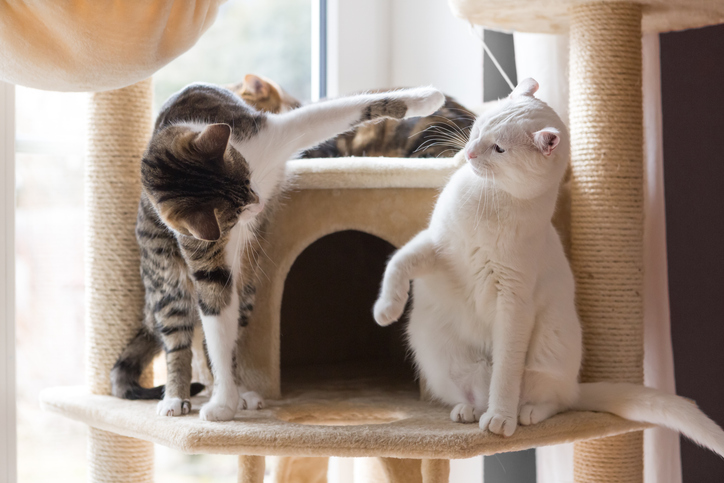

Territorial behavior in multi-cat households is a common challenge for owners, often manifesting as hissing, chasing, blocking access, or even urine marking. Successfully managing this dynamic requires a comprehensive approach centered on understanding feline social structures and providing an environment that minimizes perceived threats and promotes resource security. Cats, by nature, are solitary hunters and don’t always adapt easily to living in close quarters with conspecifics. Recognizing the subtle cues suggesting territorial disputes, such as changes in grooming habits or decreased appetite, is key to early intervention. By carefully implementing strategies to reduce competition and enhance each cat’s sense of control, owners can foster a more harmonious living situation in 2026.
Understanding Feline Territoriality
Cats mark their territory using scent glands located on their faces, paws, and flanks, as well as through urine spraying and scratching. These actions deposit pheromones that communicate information about the cat’s identity and status to other cats. In a multi-cat household, these markings can become a source of conflict if one cat feels its territory is being encroached upon. A cat might feel the need to defend resources if they are perceived as limited or if another cat is perceived as a threat. Factors like age, personality, and previous experiences all play a role in shaping a cat’s territorial instincts. Understanding these underlying motivations is crucial for developing effective solutions.
Territorial aggression often arises from a perceived lack of resources. This could include food, water, litter boxes, scratching posts, resting areas, or even the owner’s attention. When cats feel they must compete for these limited resources, conflicts are more likely to occur. The intensity of aggression can vary widely, ranging from subtle staring and posturing to outright fighting. Some cats may even engage in redirected aggression, where they lash out at another cat or even a person due to frustration caused by an external stressor. Properly assessing the situation and determining the root cause of the territoriality is essential before attempting any interventions. Owners may find information on feline behavior from resources like the American Association of Feline Practitioners.
Creating a Resource-Rich Environment
The “golden rule” for multi-cat households is to provide enough resources to satisfy each cat’s needs without forcing them to compete. This means providing multiple food and water bowls, placed in separate locations, as well as an adequate number of litter boxes. A good rule of thumb is to have one litter box per cat, plus one extra. These boxes should be located in quiet, easily accessible areas. In addition to these basic resources, providing multiple scratching posts, toys, and resting areas will help to reduce competition and promote a sense of security.
Vertical space is especially valuable in a multi-cat household, as it allows cats to establish their own territories and avoid unwanted interactions. Cat trees, shelves, and window perches can provide cats with a sense of control over their environment and allow them to observe their surroundings from a safe distance. Ensure that elevated areas are easily accessible to all cats, including older or less agile individuals. Regularly rotate toys and move resources around to keep cats stimulated and prevent boredom, as boredom can exacerbate territorial behaviors. Providing a stimulating environment goes a long way in preventing or mitigating inter-cat aggression.
Managing Introductions and Reintroductions
The Importance of Slow Introductions
Introducing a new cat to an existing household should be done gradually to minimize stress and territorial aggression. Start by keeping the new cat in a separate room with its own food, water, litter box, and resting area. Allow the cats to exchange scents by swapping bedding or toys. Gradually introduce them to each other through a closed door, allowing them to sniff and interact without direct contact. Short, supervised visits can then be initiated, gradually increasing the duration and frequency as the cats become more comfortable. Patience is key, and it may take several weeks or even months for cats to fully accept each other.
Reintroductions are also important when one cat has been away from the home for an extended period, such as after a veterinary visit. Even familiar cats can react with aggression if they are unfamiliar with the scent of the returning cat. The same gradual introduction process should be followed to minimize stress and prevent territorial disputes. It’s also worthwhile to consult a veterinarian, as they may have behavioral medication options available to aid in the introduction process. A calm and structured introduction process sets the stage for a more peaceful and harmonious multi-cat household.
Scent Management and Modulation
Scent plays a crucial role in feline communication and territoriality. Strategically using synthetic feline pheromones, such as Feliway, can help to reduce anxiety and promote a sense of calm in multi-cat households. These pheromones mimic the natural facial pheromones that cats use to mark familiar areas as safe and secure. Diffusers can be plugged into outlets throughout the house, particularly in areas where cats spend the most time. Sprays can also be used on furniture and other surfaces to create a calming environment.
Regular cleaning is also important for managing scent in a multi-cat household. Cleaning up urine marking promptly will help to prevent further marking in the same area. Use enzymatic cleaners specifically designed to break down cat urine odors, as regular household cleaners may not be effective. Avoid using harsh chemicals or heavily scented products, as these can irritate cats and disrupt their scent communication. Neutralizing undesirable scents helps to minimize territorial stress and encourages a more harmonious feline community within the home in 2026. A well-maintained and odor-neutral environment fosters a sense of security and reduces the likelihood of scent-related conflict.
Positive Reinforcement and Play Therapy
Positive reinforcement techniques can be used to discourage territorial behaviors and promote positive interactions between cats. When cats are observed interacting calmly or sharing resources peaceably, reward them with treats, praise, or petting. This will help them associate positive experiences with each other’s presence and reduce the likelihood of conflict. Avoid punishing cats for territorial behaviors, as this can increase their anxiety and make the problem worse. Redirect unwanted behaviors with a toy or a distraction. Positive reinforcement is far more effective than punishment, strengthening desired behaviors.
Interactive play sessions can be a valuable tool for managing territoriality in multi-cat households. Play provides an outlet for cats to release pent-up energy and frustration, reducing the likelihood of aggression. Play also strengthens the bond between cats and their owners and promotes a sense of well-being. Use toys that encourage chasing, pouncing, and scratching, such as feather wands or laser pointers. Rotate toys regularly to keep cats interested and engaged. Play sessions should be held at regular times each day, providing cats with a predictable routine and a consistent outlet for their energy. A planned schedule is always a good idea to keep a structured environment.
When to Seek Professional Help
In some cases, territorial aggression in multi-cat households may require the intervention of a qualified veterinary behaviorist or certified cat behavior consultant. If the aggression is severe, persistent, or causing significant distress to the cats, professional help is essential. A behaviorist can conduct a thorough assessment of the cats’ behavior, identify the underlying causes of the aggression, and develop a customized treatment plan. Treatment may involve behavioral modification techniques, environmental enrichment, or even medication. Consulting a professional ensures the health, safety, and well-being of all cats and their owners.
Medical conditions can sometimes contribute to or exacerbate territorial behaviors in cats. For example, pain, hyperthyroidism, or cognitive dysfunction can make cats more irritable and prone to aggression. A veterinarian can rule out any underlying medical conditions that may be contributing to the problem. If a medical condition is identified, appropriate treatment can help to alleviate the symptoms and reduce the aggression. Regular veterinary checkups are an important part of maintaining the health and well-being of all cats, especially those in multi-cat households. Seeking veterinary guidance should be done alongside any behavioral adjustments.
Key Takeaways
- Provide ample resources: food, water, litter boxes, scratching posts, and resting areas to minimize competition.
- Introduce new cats slowly and gradually, allowing them to adjust to each other’s scent and presence.
- Use synthetic feline pheromones to create a calming environment and reduce anxiety.
- Engage in regular interactive play sessions to provide an outlet for energy and strengthen the bond between cats.
- Seek professional help from a veterinary behaviorist or certified cat behavior consultant if the aggression is severe or persistent.
- Maintain a clean and litterbox that does not cause stress or aversion behavior.
Frequently Asked Questions
Why is my cat suddenly hissing at my other cat?
Sudden hissing can indicate a perceived threat or change in the environment. It could be due to a new scent, a health issue in one of the cats, or a change in the social dynamics of the household.
How many litter boxes should I have for two cats?
The recommended number is one litter box per cat, plus one extra. So, for two cats, you should have three litter boxes.
Can I use punishment to stop my cats from fighting?
Punishment is generally not recommended, as it can increase anxiety and worsen the aggression. Positive reinforcement and redirection are more effective approaches.
Should I separate my cats if they are constantly fighting?
If the fighting is severe or causing injuries, separation may be necessary, especially temporarily. Consult a veterinarian or behaviorist to develop a long-term management plan.
How long does it take for cats to adjust to each other?
The adjustment period can vary depending on the cats’ personalities and previous experiences. It can take several weeks or even months for cats to fully accept each other.
Conclusion
Managing territorial behavior in multi-cat households requires patience, understanding, and a commitment to creating a resource-rich and stress-free environment. By providing ample resources, introducing cats slowly, utilizing pheromones, and engaging in positive reinforcement, owners can help to foster a more harmonious living situation. Remember that every cat is an individual, and what works for one cat may not work for another. By observing your cats closely and adapting your strategies as needed, you can create a home where all your feline companions can thrive. With a little effort, a peaceful multi-cat household is achievable in 2026.